
Illinois Public Records
Illinois public records are open to the public under the state Freedom of Information Act. This law says that all records held by government offices are presumed open to anyone who asks. You can search court files, land deeds, vital records, and much more from state and county agencies across Illinois. The state has 102 counties, each with its own clerk and court system that keeps local public records. Many of these Illinois records are now in online databases. Others still need a written request or an in-person visit to the right government office.
Illinois Public Records Quick Facts
Where to Find Illinois Public Records
The main places to get public records in Illinois are county offices and state agencies. Each county has a county clerk, a circuit clerk, and in some cases a recorder of deeds. These offices keep most of the records people search for. County clerks handle vital records like birth and death certificates. They also keep marriage licenses and business name filings. Circuit clerks store all court case files in Illinois. This includes civil, criminal, family, and probate cases.
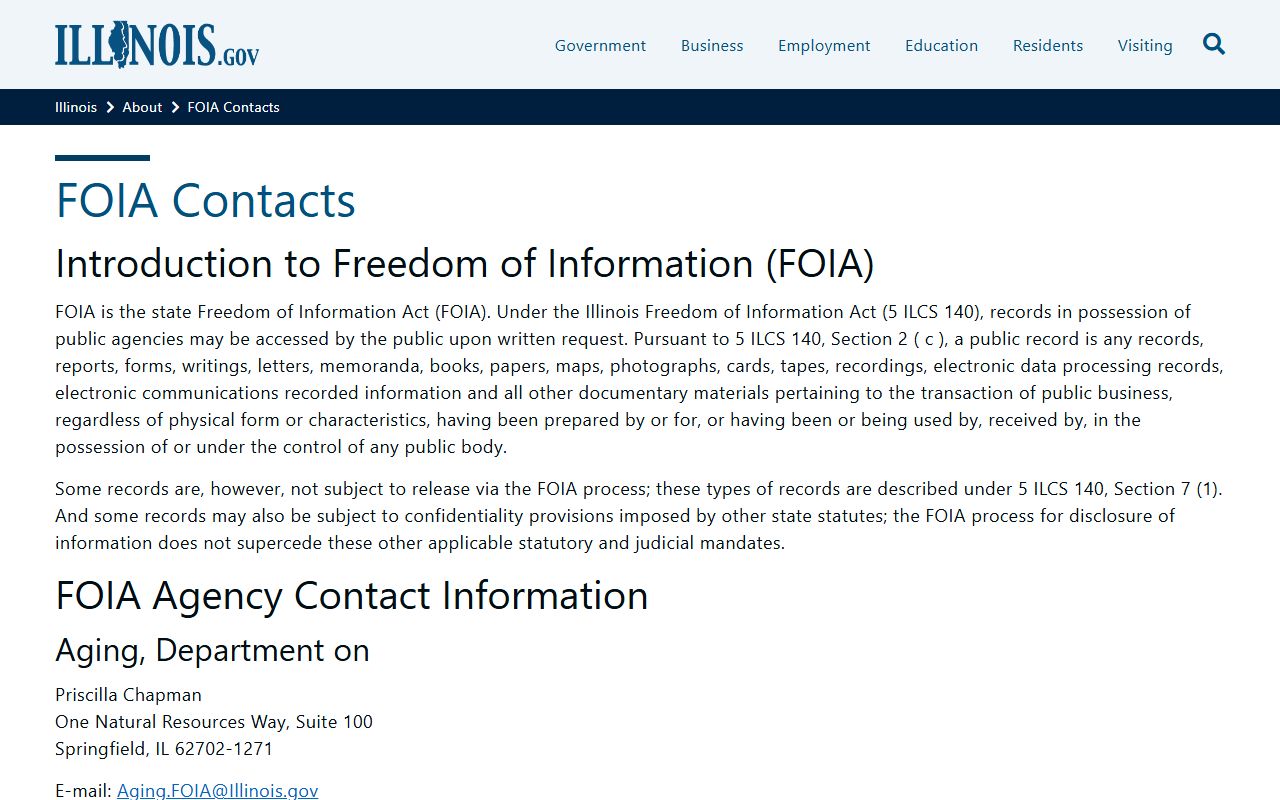
At the state level, the Illinois State Archives in Springfield is the main place for government records with lasting value. The Archives holds state agency files, military records, land records, and historical vital records indexes for Illinois. Staff can help you find what you need during their hours of 8:30 AM to 4:30 PM on weekdays. You can also search their databases online at ilsos.gov for free. The Illinois FOIA contacts page lists the officer for every state agency. That page is your best starting point for any state-level records request.
Most public records in Illinois are free to view in person. Copies come with a small fee that varies by office and county.
Illinois Court Records Search
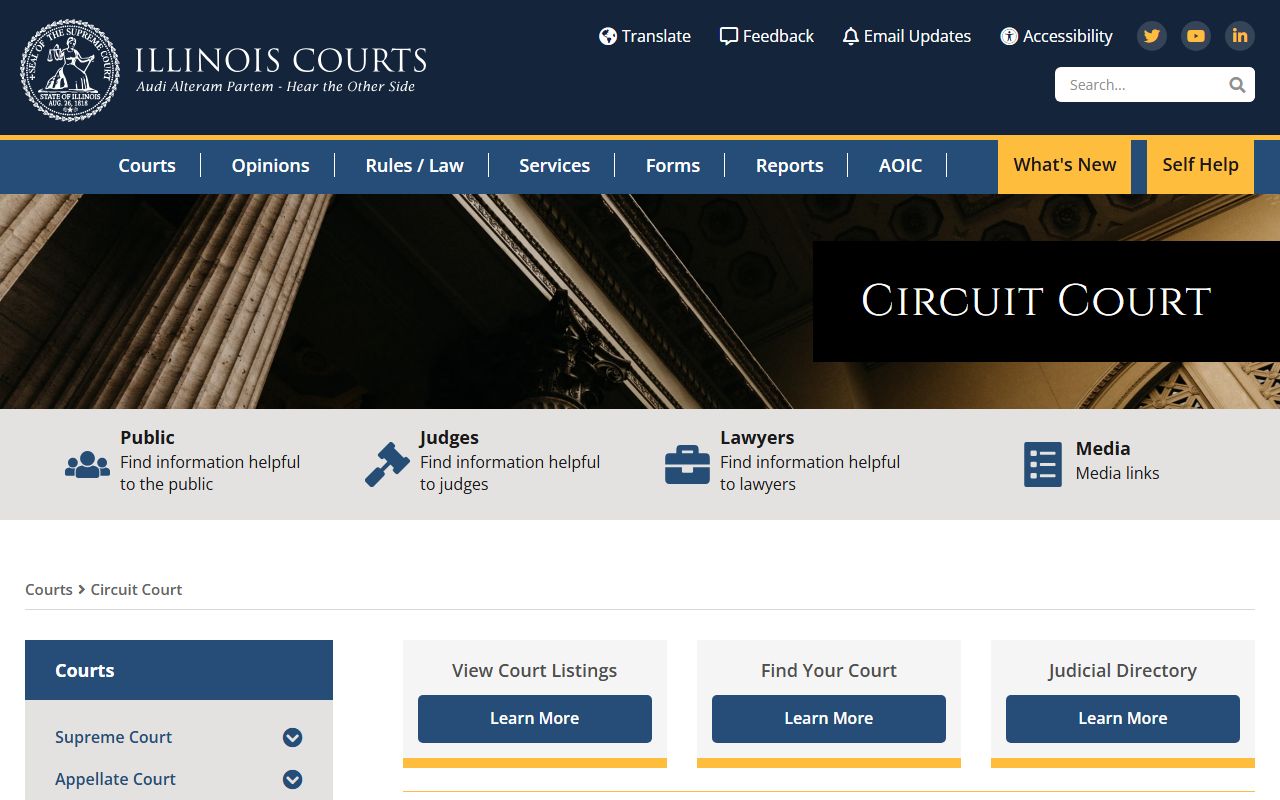
Illinois runs its courts through 25 judicial circuits. Seven are single-county circuits for Cook, DuPage, Kane, Lake, McHenry, St. Clair, and Will. The other 18 circuits each cover two or more counties. In all of them, the circuit court is the court of original jurisdiction. That means it hears every type of case first.
Circuit clerks in each county keep the court records. They attend sessions and preserve the files. You can find records for civil suits, criminal charges, divorces, probate matters, and traffic cases at any circuit clerk office in Illinois. The official records are paper files kept at the courthouse. But many counties now offer some form of online case lookup as well.
Cook County has a free case search online. It covers civil, law, chancery, domestic relations, probate, and traffic court records. Other large counties in Illinois have their own search portals too. Smaller counties often use the Judici system for online court case access.
Note: Online case data is not the official court record, and updates may take a few days to show up.
Vital Records in Illinois
The Illinois Department of Public Health handles vital records at the state level. Birth and death records are not public in Illinois. Only the person named on a birth record, their parents, or a legal guardian can get a certified copy. Death records need proof of a personal or property interest. These rules come from the Vital Records Act (410 ILCS 535).
Marriage records work a different way in Illinois. The state health department does not issue marriage certificates at all. You have to go to the county clerk in the county where the wedding took place. The IDPH can verify that a marriage happened, but only as a plain yes-or-no check. That costs $5.
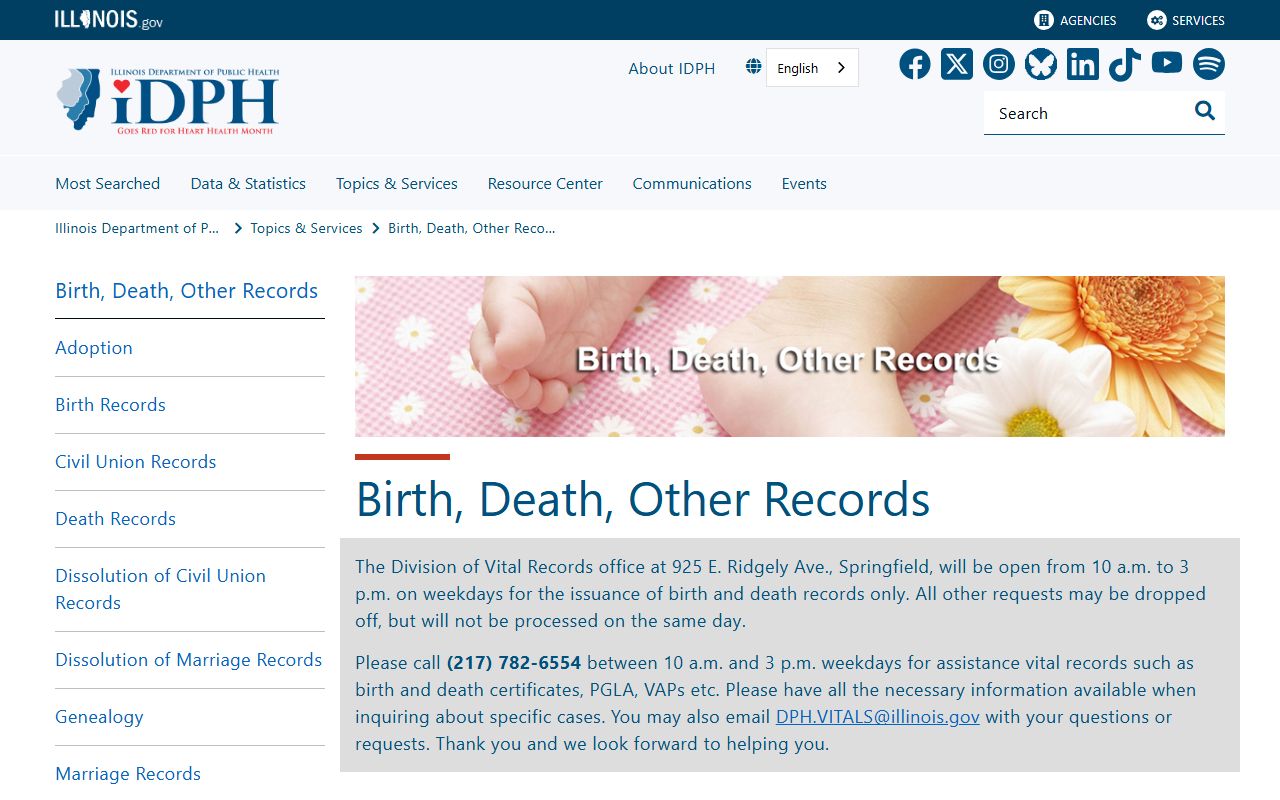
Processing time for state vital records requests is about 12 weeks. County offices are often faster. For genealogy, birth records older than 75 years, death records older than 25 years, and marriage records older than 50 years are available at lower fees in Illinois. County genealogy copies cost about $2 each.
Illinois FOIA Requests
The Illinois Freedom of Information Act (5 ILCS 140) gives you the right to get government records. The law states that "all persons are entitled to full and complete information regarding the affairs of government." Every record held by a public body in Illinois is presumed open. If an agency wants to keep a record private, it has to prove the exemption by clear and convincing evidence. This puts the burden on the government, not on you.
Filing a FOIA request in Illinois is simple. Write to the FOIA officer at any government office. No special form is needed. Just describe what records you want. Be specific so the agency can find them. The office must respond within 5 business days. It can extend by 5 more days if it needs extra time. No response counts as a denial under the law.
If your request is denied in Illinois, you have options. Ask the agency to look at it again first. You can also file a complaint with the Public Access Counselor at the Attorney General's office. Reach them at 877-299-3642 or email public.access@ilag.gov. As a last resort, you may file a lawsuit to get the records you asked for.
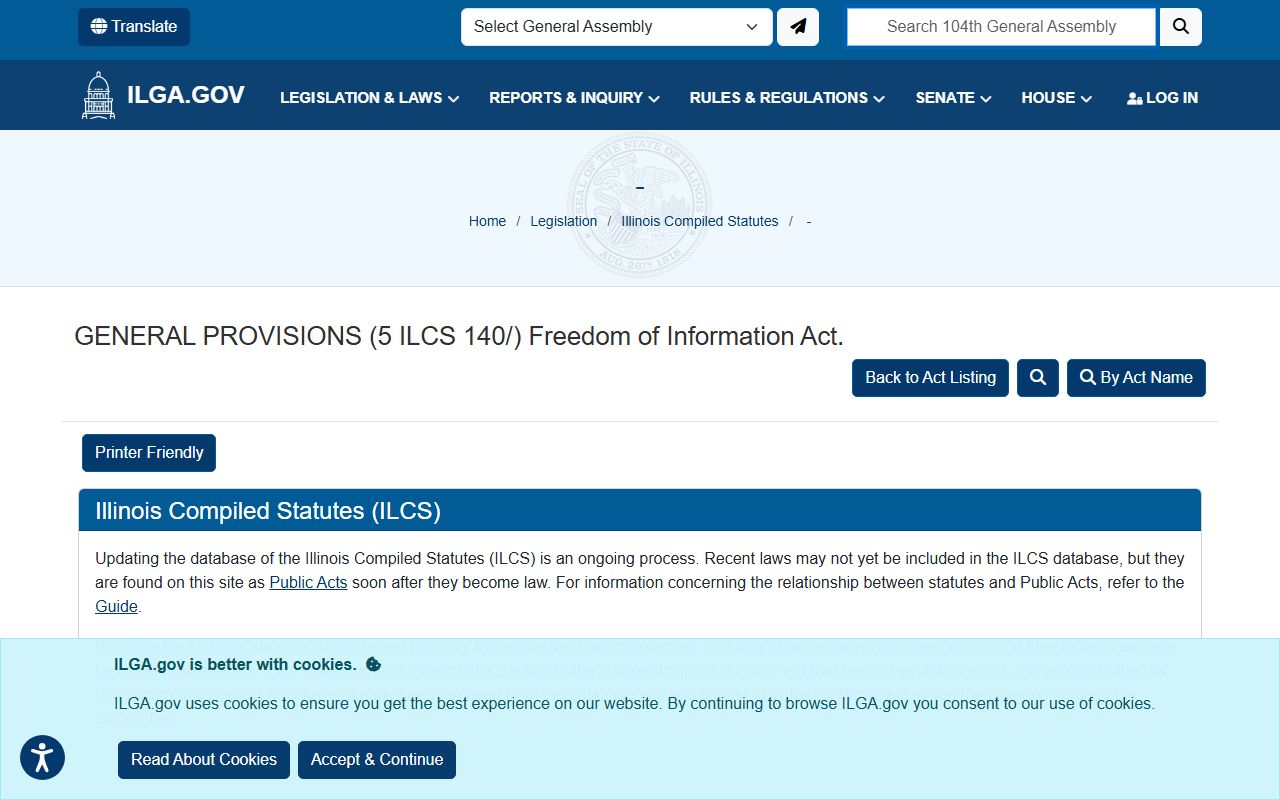
Note: Private data like social security numbers, medical files, and home addresses is exempt from FOIA disclosure in Illinois.
Online Public Records Databases in Illinois
Several free databases let you search Illinois public records from home. The Illinois State Archives runs a Global Database Search that covers marriage indexes from 1763 to 1900, death indexes from before 1916, death certificates from 1916 to 1971, military records, and land tract sales. These are all free to search.
The Secretary of State Business Entity Search lets you look up any corporation, LLC, or nonprofit registered in Illinois. You can search by name, file number, or registered agent. Results show the current status, officers, and filing details at no cost.
For records tied to a specific place, start with the county where the event took place. Many county clerks and recorders have online search tools for land records and filed documents. Common systems include Laredo, Tapestry, and county-built portals. Circuit clerks in larger Illinois counties run case lookup sites. Smaller ones may use Judici or similar platforms. The State Records Act (5 ILCS 160) and the Local Records Act (50 ILCS 205) set rules for how long agencies in Illinois must keep their records.
Types of Public Records in Illinois
Public records in Illinois cover a wide range of documents kept by local and state offices. Each type has its own process and custodian.
- Court records from circuit clerks (civil, criminal, family, probate)
- Property records from the recorder of deeds (deeds, mortgages, liens)
- Vital records from county clerks (birth, death, marriage certificates)
- Business filings from the Secretary of State
- Government meeting minutes and agendas
- Law enforcement incident reports through FOIA
Court records go through circuit clerks. Property records are at the recorder of deeds. Vital records start at the county clerk. For state agency records in Illinois, you file a FOIA request with that agency's designated officer. Each county in Illinois may combine some of these offices. In many smaller counties, the county clerk also serves as the recorder.
Browse Illinois Public Records by County
Each county in Illinois keeps its own public records through the county clerk, circuit clerk, and recorder. Pick a county below to find local contact info and resources.
Public Records in Major Illinois Cities
Residents of major Illinois cities file public records requests through their city clerk or the county offices that serve their area. Pick a city below to learn about public records access there.