
Christian County Public Records
Christian County public records are housed at county offices in Taylorville, the county seat in central Illinois. About 32,000 people live in Christian County. The county clerk handles vital records and elections. The recorder maintains land filings. The circuit clerk keeps all court case documents. Property tax records, deed transfers, and other files are open to the public from the courthouse. You can search for Christian County records in person at the Taylorville courthouse, by mail, by phone, or through a FOIA request. State databases also provide access to some circuit court information and vital records ordering options.
Christian County Quick Facts
Christian County Clerk Office
The Christian County Clerk handles vital records, elections, and tax extension duties from the courthouse in Taylorville. Birth certificates, death certificates, and marriage licenses are all issued through this office. The clerk also manages voter registration and election results for the county.
Vital records from Christian County follow Illinois state rules under 410 ILCS 535. Birth and death records are restricted. Only the person named, parents, legal guardians, or someone with a direct legal interest can get a certified copy. You need valid photo ID and must state your relationship to the person on the record. Marriage certificates are open to anyone. No special eligibility is required to obtain a copy of a marriage record from Christian County.
The clerk's office also handles property tax extension work. This involves calculating how tax levies are spread across Christian County properties. The actual tax bills and payment records come from the county treasurer. For questions about either function, the clerk's office in Taylorville is the starting point. Hours follow a regular weekday schedule, though it is a good idea to call first if you are traveling from outside the area to make sure the office is open.
Court Records in Christian County
Christian County is part of the 4th Judicial Circuit in Illinois. The circuit court at the Christian County Courthouse in Taylorville handles all case types. Civil lawsuits, criminal prosecutions, family law matters, probate filings, traffic cases, and small claims all go through this court. The circuit clerk files and maintains all case records.
Court records are public unless a judge has sealed them. You can contact the circuit clerk to check case status, get copies of court documents, or find out about upcoming hearings. Criminal records are accessible for most cases. Civil files including divorces, contract disputes, and property cases are also open to public review. Fees for certified copies follow state guidelines.
Christian County does not run its own online case search system. The Illinois Courts website has general information about the circuit court system, but specific Christian County case lookups require contacting the clerk directly. A phone call can usually confirm whether a case exists and what documents are available. E-filing through the statewide platform is an option for certain case types, making it easier to submit filings without driving to Taylorville.
The Illinois Courts website outlines the circuit court system and provides resources for finding court information across the state, including the 4th Judicial Circuit that serves Christian County.
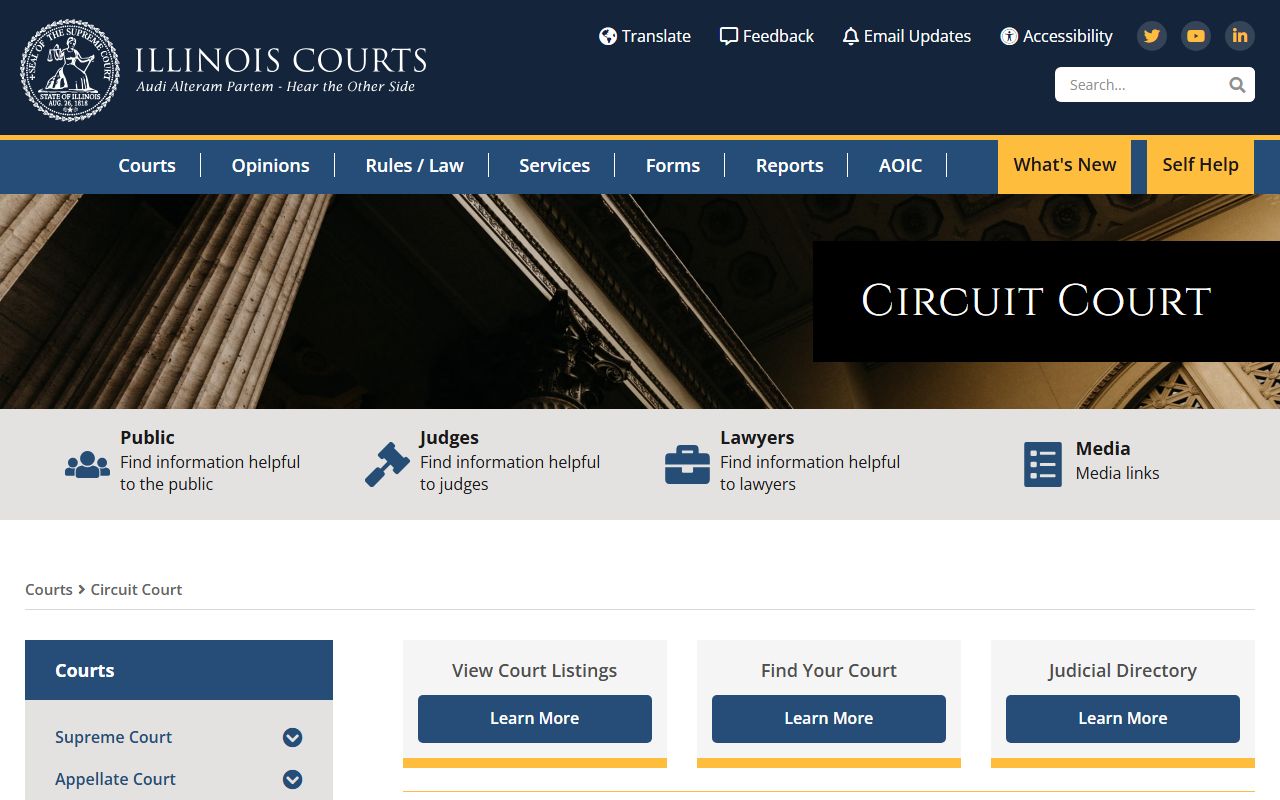
This state resource helps you understand how the court system is organized and where to direct your Christian County court records request.
Note: Sealed and expunged records are not accessible, so some older criminal cases may have limited availability depending on court orders.
Christian County Land Records
The Christian County Recorder maintains land records at the courthouse in Taylorville. Deeds, mortgages, mortgage releases, liens, plats, and other real estate filings are recorded and indexed here. The office keeps both a grantor and grantee index, which allows searching by the name of either party in a property transaction.
When land changes hands in Christian County, the new deed gets filed with the recorder. Mortgage lenders also file their documents here. If you need to verify property ownership, check for existing liens, or trace the chain of title for a parcel, the recorder's office is where to start. Christian County does not have an online property search portal, so most searches happen at the courthouse or through a title company. Property tax assessment data is kept by the county assessor, and payment history is at the treasurer's office. Between these three offices, you can get a full picture of any property in Christian County.
FOIA Requests for Christian County
The Illinois Freedom of Information Act (5 ILCS 140) lets anyone request public records from Christian County government offices. You do not have to live in the county or explain why you want the records. Every public body in Illinois must follow this law.
To file a FOIA request, write to the FOIA officer at the Christian County office that has what you need. Be specific in your request. State the names, dates, and types of records you are looking for. The office has 5 business days to respond. Extensions are allowed in some cases. If your request is denied, the county must tell you why and explain how to appeal. Appeals go to the Public Access Counselor at the Illinois Attorney General's office at 877-299-3642.
FOIA is free to submit. The county can charge for copies if the request is large. The first 50 pages of black and white copies are typically free. After that, Christian County may charge up to 15 cents per page. Color copies and electronic files may have different rates.
Christian County Vital Records
Genealogy researchers often look for older records from Christian County. Illinois opens birth records after 75 years, death records after 25 years, and marriage records after 50 years for genealogy access. These copies cost less and do not require proving a close relationship to the person on the record. The county clerk in Taylorville can fill these requests. The state vital records office in Springfield also issues copies.
The Illinois vital records program oversees birth, death, and marriage records statewide, including those filed in Christian County.
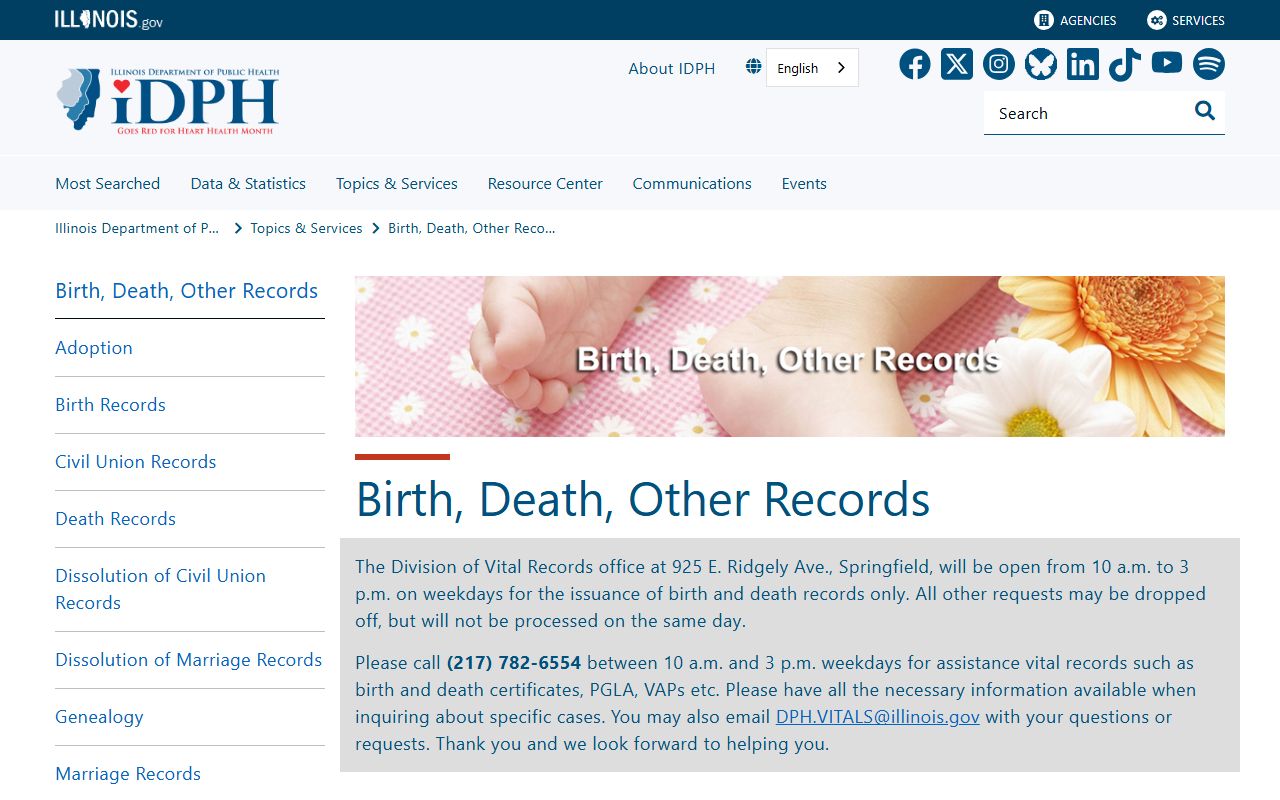
This state page explains the ordering process and eligibility rules that apply to vital record requests across all Illinois counties.
For current records, the process is more restricted. You must be an eligible person to get a certified birth or death certificate from Christian County. The clerk will ask for identification and proof of your relationship. Marriage license applications can be completed at the clerk's office. Both parties must appear in person with valid ID. There is a one-day waiting period in Illinois before the license is valid. The fee for a marriage license is set by state law.
Note: You can also order Illinois vital records through VitalChek online, though processing takes longer than visiting the Christian County Clerk in person.
Searching Christian County Records
All Christian County offices are at the courthouse in Taylorville. Knowing which office to contact makes the process faster. Here are the main paths for different record types.
- County clerk for birth, death, and marriage records plus tax extensions
- County recorder for deeds, mortgages, liens, and other land filings
- Circuit clerk for court case records of all types
- County assessor for property values and assessment data
- County treasurer for tax bills and payment history
- FOIA officer at any department for other government documents
Christian County handles a moderate number of requests. Staff are familiar with common record types and can guide you through the process. Bring photo ID if you need restricted records. For mail requests, include a self-addressed stamped envelope and payment by check or money order. Most offices accept cash for in-person purchases. Call the specific office before visiting if you have questions about fees or availability of a particular record.
Nearby Counties
Christian County is in central Illinois near Springfield. Records for cases or properties near the county border may be filed in one of these adjacent counties.